Cold Safety and Energy Savings Tips
Cold temperatures and winter storms can pose serious risks, but taking simple precautions can help keep you and your loved ones safe during the colder months. Older adults, young children, and individuals with chronic illnesses are especially vulnerable to cold-related conditions such as hypothermia and frostbite. If you know someone in your family or neighborhood who may be at risk, please check on them regularly and safely.
Protect yourself, your family, and your community from the effects of extreme cold by following these tips:
-
Stay hydrated by drinking plenty of non-caffeinated, non-alcoholic fluids.
-
Dress warmly by wearing layers, covering exposed skin, and using hats, gloves, and insulated footwear when outdoors.
-
Limit time outside in extreme cold and take frequent breaks indoors to warm up.
-
Stay indoors when possible and set your thermostat to 68°F or lower to conserve energy. Use weather stripping and keep blinds or curtains closed to help retain heat.
-
Use blankets and warm clothing indoors to stay comfortable without overusing heating systems.
-
Conserve energy by limiting use of large appliances or running them during off-peak hours.
These small steps can make a big difference in staying safe, warm, and energy-efficient during winter weather.
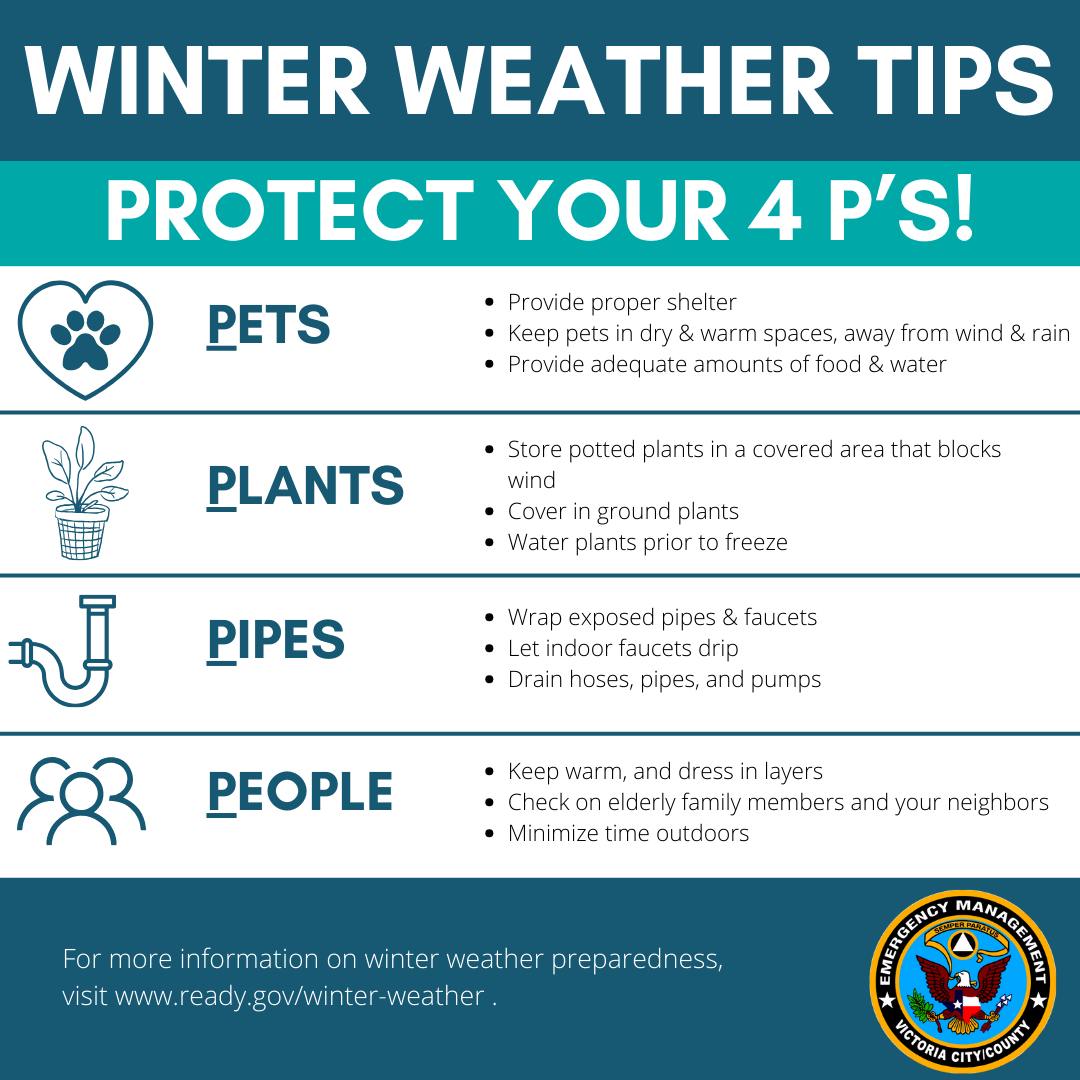
Winter Weather Reminder: Protect the 4 P’s
As winter weather approaches, residents are encouraged to take proactive steps to protect Pets, Plants, People, and Pipes.
Pets
-
Bring pets indoors whenever possible and provide warm, dry shelter.
-
Ensure outdoor animals have adequate bedding and access to unfrozen water.
-
Limit pets’ time outdoors during freezing temperatures.
Plants
-
Cover sensitive plants with cloth or frost blankets.
-
Move potted plants indoors or into a protected area such as a garage.
-
Water plants ahead of a freeze to help protect roots from cold damage.
People
-
Check on elderly neighbors, individuals with disabilities, and those with medical needs.
-
Dress in layers and limit time spent outdoors in extreme cold.
-
Avoid unnecessary travel and remain cautious of icy conditions.
Pipes
-
Allow faucets to drip to help prevent pipes from freezing.
-
Open cabinet doors under sinks to allow warm air to circulate around plumbing.
-
Insulate exposed pipes and outdoor faucets.
Taking these precautions can help reduce the risk of damage and ensure the safety and well-being of the community during winter weather events.